
“We shake the sky, shake the ground, and stir the oceans so that we do not become a nation living on a mere 2.5 cents a day. A nation that works hard—not a nation of tempeh, not a nation of coolies—willing to endure hardship for the sake of our ideals,” founding President Sukarno roared during a speech marking the groundbreaking of the University of Indonesia’s Faculty of Agriculture (now Bogor Agricultural University/IPB) building in Bogor on April 27, 1952.
The resonance of those words remains profoundly relevant today, as we reflect on the plight of the people—fishermen, smallscale fish farmers, salt farmers and coastal conservationists. These communities desperately need government action, working in collaboration to free them from the looming threat of catastrophic disasters along the northern coast of Java (Pantura).
Massive national development since the 1970s, characterized by a land-based bias and a blatant disregard for environmental carrying capacity, is now severely impacting community survival. The threat of sinking homes and lost livelihoods is becoming an imminent reality for thousands of residents facing the Java Sea, stretching from Serang in Banten to Gresik in East Java.
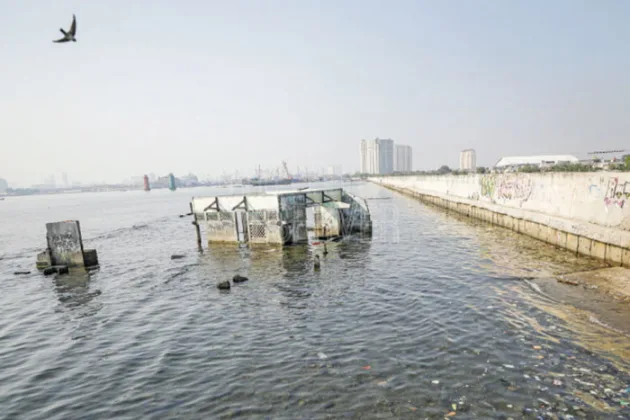
In Jakarta, floodwaters ranging from 20 to 60 cm frequently inundate fishery production centers, residential areas and strategic economic zones. Similarly, in West Java, thousands of hectares of rice fields, salt ponds and fish farms stretching across Sukabumi, Karawang, Bekasi, and Indramayu have been swallowed by tidal flooding, placing local harvests at high risk of failure.
Central Java faces a similar crisis, where tidal floods often reach depths of 10 to 50 cm, devastating communities in Demak, Kendal, and Semarang. Consequently, the National Disaster Mitigation Agency (BNPB) estimates that economic losses due to tidal flooding on the northern coast of Central Java between 2014 and 2023 have reached a staggering Rp1.2 trillion.
Such disasters plaguing the Pantura region are the direct consequence of development that ignores environmental limits. Excessive groundwater extraction, coupled with a lack of strict monitoring, has triggered severe land subsidence. Ironically, the rampant clearing of mangrove forests over the last five decades for residential and commercial tourism has only exacerbated the vulnerability of the coastline.
The shrinking of mangrove ecosystems has crippled the coast’s ability to support marine life and human habitation. This ecological decline has led to increased abrasion, dwindling fish catches, seawater intrusion into freshwater sources, and the spread of diseases like malaria. These conditions are further exacerbated by rising sea levels, driven by climate change, turning once-distant fears into a grim daily reality.
First Vice President Muhammad Hatta once remarked that prosperity is essentially “a feeling of life one level higher than happiness… When a person feels happy, nothing is lacking… He feels justice in his life, and there are no disturbances from his surroundings. He is free from looming poverty.” This vision serves as a vital guide for restoring the environment and the lives of those on the Pantura. The urgent question remains: how do we initiate this recovery?
First, there must be a collective willingness among all elements of the nation—particularly leaders in the executive, legislative, and judicial branches—to acknowledge that the current land-based development model has exerted dire consequences. This recognition must be followed by strategic steps to address root causes, identify logical solutions through active community participation and prioritize the principle of social justice in every implementation.
Bio-infrastructure vs. Giant Sea Wall
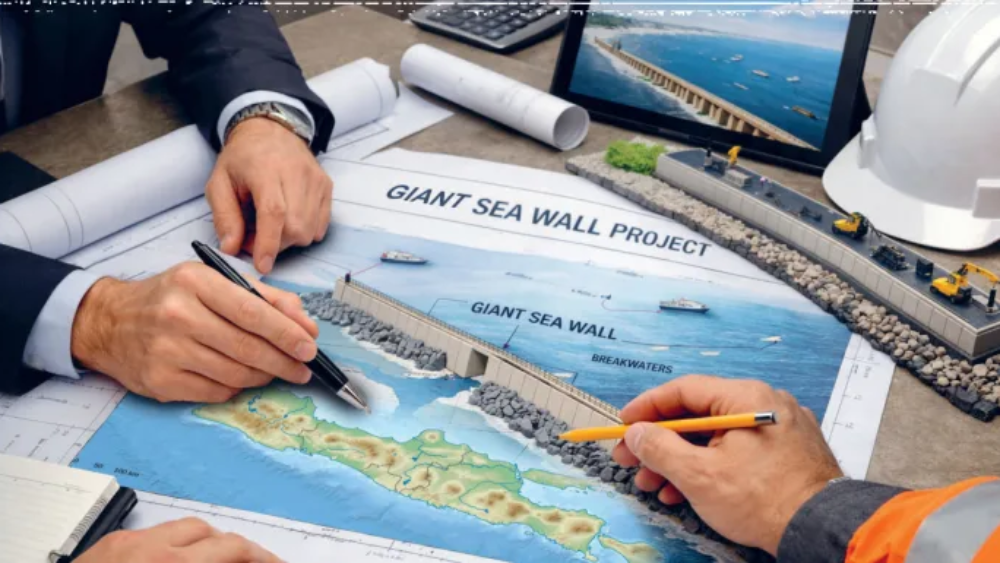
In a direct response to the escalating crisis, President Prabowo Subianto has established the Pantura Management Authority (BOP2J) through Presidential Regulation 77/2025. The body is tasked with overseeing the erection of a Giant Sea Wall (GSW), a national strategic project (PSN) whose construction will span 2025 to 2029. The government’s involvement is seen as the key prerequisite for reversing environmental decay along the Pantura.
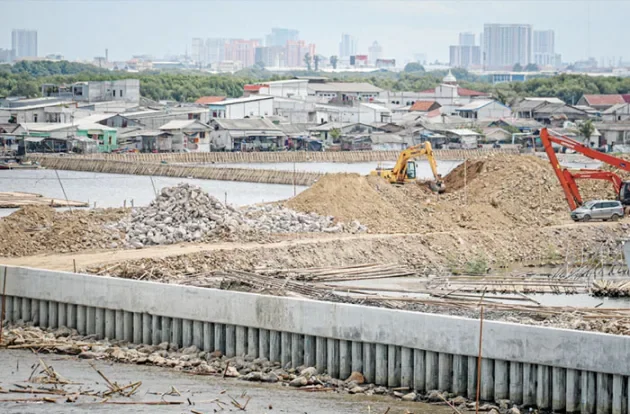
The GSW project is a massive undertaking, planned to span five provinces—Banten, Jakarta, West Java, Central Java and East Java—covering 535 kilometers. With an estimated investment of $100 billion (Rp1,681 trillion), construction is set to begin on the west side in Banten and gradually progress toward Gresik. While 11.8 km of dikes have already been raised in Jakarta to mitigate flooding in Muara Baru and Pantai Mutiara, experts remain divided on whether a physical wall is the ultimate solution to prevent Jakarta and the Pantura from sinking.
As this megaproject moves forward, several distinct development options have emerged in the public sphere, each offering a different diagnosis of the problem and its potential solutions:
Option 1: Localized Embankments and Halting Reclamation.
Some experts argue that a “giant” sea wall is unnecessary and potentially harmful. According to this view, flooding in the Jakarta-Bekasi-Tangerang corridor is caused by land subsidence, not rising sea levels. A giant wall would lengthen river channels and slow water flow, causing accelerated river silting and higher dredging costs. Instead, the focus should be on building localized walls only in subsidence-prone areas, raising river embankments, and halting coastal reclamation.
Option 2: Location-Specific Mitigation.
This perspective suggests the GSW can be a priority if funding permits, but argues against a one-size-fits-all approach. Under this scheme, BOP2J would tailor solutions to each region: sea walls for major cities like Jakarta and Semarang; relocation for vulnerable areas like Karawang and Subang; and infrastructure elevation for such districts as Tangerang and Gresik.
Option 3: Bio-Infrastructure and Ecological Restoration.
The third view warns that the GSW could trigger an ecological and socio-institutional crisis, altering ocean currents and leading to ocean grabbing. As an alternative, this option proposes bio-infrastructure—the reforestation of the coast with mangroves and other greenery. A mangrove-based green belt can reduce wave energy by up to 75 percent, protecting the coast from abrasion and tsunamis while ensuring socio-economic justice for coastal communities.
The final path forward for the Pantura will likely require a delicate balance between these options—integrating the protective power of physical engineering with the long-term sustainability of biological solutions.
In light of these three perspectives, President Prabowo is faced with a critical decision-making juncture. With budgets stretched thin, clear leadership is essential, to ensure that national strategy does not become a burden on the very people it aims to protect— particularly small-scale fishers, salt farmers and coastal conservationists. The crisis along the Pantura is not merely a failure of physical infrastructure; it is a profound socio-economic challenge that requires the state to reconsider how it protects and empowers vulnerable coastal communities.
Fishing communities in Indonesia remain synonymous with poverty. Data from Statistics Indonesia (BPS) reveals that as of September 2025, the number of poor people in rural areas—including 10,666 coastal villages—reached 12.18 million. While this is a slight decrease from previous months, the concentration of poverty in these 300 regencies remains a significant hurdle for national development.
Beyond economics, the profession itself suffers from neglect, particularly regarding safety and mental health. The sea remains a “dangerous and foreign world,” as James Acheson, an American anthropologist studying fishing, famously warned. For Indonesia’s 2.4 million fishermen (as of 2023, according to the Maritime Affairs and Fisheries Ministry)—over 95 percent of whom are small-scale operators using limited gear— the risks are escalating. Extreme weather has led to a tragic rise in fatalities and disappearances at sea; in 2025 alone, at least 68 fishermen were reported missing or deceased. This underscores a lack of “special protection” from the state for those working in one of the world’s most hazardous occupations.
French researcher Christophe Bene highlights how the negative labeling of fishing communities often stems from three key misperceptions that the government must address:
(1) Institutional Absence. Fishermen are not inherently the “poorest of the poor” due to low income alone, but rather due to the Government’s absence in providing basic rights. This vacuum allows middlemen to exploit producers, forcing a “survival of the fittest” dynamic in coastal villages.
(2) Systemic Vulnerability. Vulnerability is exacerbated by an uncertain production chain—from fishing and processing to marketing—and the lack of protection for traditional fishing grounds.
(3) Marginalization. Socio-political marginalization limits access to essential services such as healthcare, education, and economic empowerment, further isolating these communities from national progress.
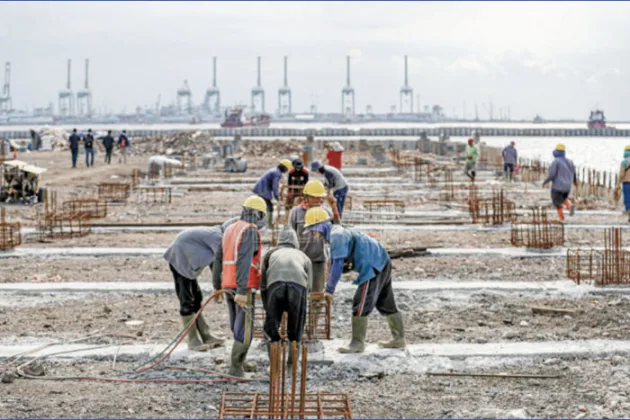
To restore the lives of people in coastal areas and small islands, the Government must move beyond simply celebrating increased fishery production. While the state budget has grown to a projected Rp12.34 trillion in 2026, the focus must shift toward a constitutional mandate that prioritizes the people’s welfare.
The priority must be addressing the “disconnected” nature of current government programs. Strategic restoration involves fixing upstream-to-downstream fisheries governance, ensuring guaranteed life and social protection for families, and resolving the persistent struggle for subsidized fuel. Only by removing the barriers of unfriendly development and the looming threat of coastal disasters can the state fulfill its obligation to those who serve as the backbone of Indonesia’s maritime identity.
The second principle of constitutional resource management centers on the equitable distribution of benefits. It is a stark reality that when increased national fishery production serves only to widen the poverty gap, the system has failed. Currently, small-scale fishermen and fish farmers are often relegated to the status of mere laborers, while boat and land owners—acting as employers—disproportionately siphon off government program funds. This raises a fundamental question: are the 6.2 million fishing families in Indonesia truly enjoying any tangible benefits from the vast marine resources they harvest?
The third principle involves ensuring high levels of community participation in determining the utilization of natural resources. Since 2010, the human cost of climate change has escalated, with an increasing number of fishermen lost or killed at sea. Furthermore, the rising frequency of catastrophic disasters—including earthquakes, flash floods and tidal surges—has stripped coastal communities of their livelihoods. Under Law 24/2007 on disaster management, extreme weather should be categorized as a national disaster. However, while the Meteorology, Climatology and Geophysics Agency (BMKG) provides regular forecasts, this data has not yet translated into a protective shield for fishermen, leaving them to face accidents and death without any guarantee of life protection.
The fourth principle mandates respect for traditional rights and the dignity of the fishing profession. Indonesia stands in sharp contrast to neighboring Malaysia, where “protein heroes” receive a monthly capital allowance of Rp500,000 directly via a fisherman’s card, alongside health insurance and seamless access to subsidized fuel. In contrast, Indonesian fishermen, from Miangas to Rote Island, struggle with mounting debt, rampant levies, and a lack of basic social protection. It is deeply ironic that in a nation comprised of 75 percent sea, families often consume imported fish and expensive imported salt, while local producers remain impoverished.
 Despite being the world’s third-largest producer in capture fisheries and fourth in aquaculture, Indonesia faces a critical “disconnect” between its upstream and downstream sectors. While export values surged from $2.69 million in 2008 to $6.7 billion in 2025, these gains rarely reach the small-scale producers. Instead, fishing villages are plagued by failing fish auction sites (TPI), restricted access to the sea resulting from impractical reclamation or conservation practices, and the persistent, unresolved hurdle of accessing subsidized fuel.
Ultimately, the government must move beyond measuring success through export figures and instead prioritize social and life protection for those at the front lines of the maritime industry. Restoring the welfare of fishermen requires a governance model that is not only productive but also inclusive, ensuring that the wealth of Indonesia’s oceans serves the prosperity of its own people.
The second obstacle to realizing Indonesia’s maritime potential is the lack of connectivity between production, distribution and consumption centers. Despite the mandate of Law 45/2009 on fisheries, Indonesia’s logistics competitiveness ranks 59th globally, trailing significantly behind such regional peers as Singapore, Malaysia, Thailand and Vietnam. This disconnect prevents the wealth of the sea from reaching the tables of the people and the pockets of small-scale producers.
To resolve this, President Prabowo must redirect national fishery production toward three strategic measures:
(1) Transition to a people-centered economic model, involving direct collaboration between state-owned enterprises (BUMN) or the Red-White Cooperatives and grassroots organizations of fishers and farmers.
(2) Pivot from an export-only orientation to maximizing Indonesia’s demographic potential. With a population projected to reach 305 million by 2035, the domestic demand for seafood is a powerful engine for economic growth.
(3) Reactivate BUMN and region-owned enterprises (BUMD) at the provincial and regency/municipal levels to ensure the state acts as a stabilizer and off-taker for local catches.
National leadership must strictly implement the National Logistics System (Sislognas) and the National Fish Traceability and Logistics System (Stelina). By synchronizing these frameworks across ministries, the vision of the 1957 Djuanda Declaration—positioning the sea as a unifying bridge for the mobility of people, goods, and services—can finally be realized, from Miangas to Rote.
As Muhammad Hatta wisely noted, independence is hollow if it fails to fulfill the people’s aspirations for physical and spiritual prosperity. The independent and sustainable management of marine resources is not a new concept; it has been the lifeblood of indigenous communities since the 16th century. Sustainable customary fishing practices such as Sasi (Maluku), Bapongka (Central Sulawesi), and Awig-awig (Bali and West Nusa Tenggara) prove that coastal communities have long managed their resources effectively, and without external debt or any foreign intervention.
Geopolitically and geoeconomically, Indonesia’s waters have become a theater for global maritime powers. To stand tall on the world stage, Indonesia must cease all “inferior practices” and reject the “nation of coolies” mentality. A paradigm shift is no longer optional; it is a sine qua non (something absolutely indispensable).
Continuing a land-based development model while denying our maritime nature only leads to ecological disasters, disrupted food supplies and crippled competitiveness. This is President Prabowo’s momentum: to restore the coastal environment and the dignity of the people living on the Pantura and throughout the archipelago. By positioning the sovereignty of the people as the core subject of development, we can truly declare: Jalesveva Jayamahe (at sea we are victorious).
This opinion article’s details can be retrieved using the following link: Giant Sea Wall dan Perlindungan Nelayan The Independent Observer Abdul Halim 6.3.2026
Add a Comment